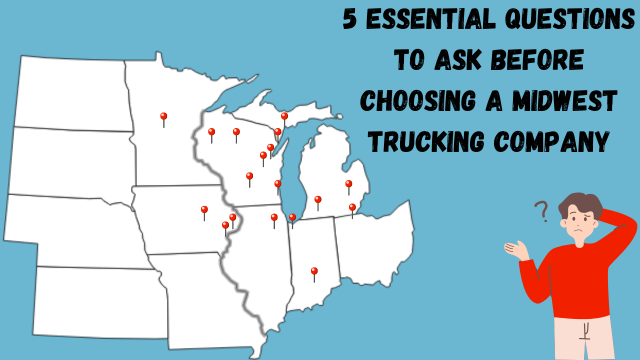

5 Essential Questions to Ask Before Choosing a Midwest Trucking Company

If you’re researching carriers, you already know the basics: pay, home time, lanes. But choosing a Midwest trucking company is about more than checking boxes. After talking to drivers who’ve been around the industry for years, there are deeper questions that matter just as much. Questions that separate companies where drivers stay for decades from companies with revolving door turnover.

Here are five questions experienced drivers wish they’d asked earlier, and why the answers matter when choosing a trucking company.

1. What’s Their Actual Safety Record, Not Just Their Safety Talk?

Every carrier says they prioritize safety. That’s table stakes. What matters is what they actually do about it.

Start with the Federal Motor Carrier Safety Administration (FMCSA) SAFER system. Look up their SMS scores and inspection history. Check violation rates. See how they compare to similar sized carriers in their category. Numbers don’t lie, and this data is public for a reason.

But beyond the official record, dig into how safety works day to day. Ask these follow up questions:

What happens if you’re tired or the weather turns dangerous? Some carriers have a “captain of your truck” policy where drivers have the final call on whether it’s safe to drive. Others push dispatch windows no matter what. That’s different from companies where you’re pressured to push through regardless of conditions.

What safety technology do they actually use? Modern carriers invest in lane assist, collision mitigation systems, and advanced camera systems. At Veriha, they’ve rolled out MirrorEye systems to 25% of the fleet. MirrorEye replaces traditional side and west coast mirrors with cameras and in-cab displays, giving drivers better visibility in all weather conditions and eliminating blind spots. Combined with other safety tech, these systems help prevent accidents before they happen.

How do they handle accidents and incidents? Do they investigate fairly, or do they automatically assume the driver is at fault? Companies with strong safety cultures treat incidents as learning opportunities, not just discipline triggers.

Safety isn’t just about avoiding accidents. It’s about working for a company that genuinely supports you in making safe decisions, even when it’s inconvenient for dispatch.

2. How Old Is Their Equipment, and How Well Do They Maintain It?

Ask directly: What’s the average age of your tractor fleet?

At Veriha, it’s 32 months. That means you’re driving equipment with modern features and fewer breakdown headaches. When choosing a Midwest trucking company, fleet age matters. Compare that to carriers running trucks with 500,000+ miles and deferred maintenance issues.

But age is only part of the story. Maintenance matters just as much.

How fast do maintenance issues get addressed? If you report something during your pre-trip, does it get fixed that day, or are you told to “keep an eye on it” for another week? Experienced drivers know the difference between a company that maintains equipment proactively versus one that runs things until they break.  How often are they doing preventative maintenance service on their trucks and trailers?

What technology comes standard? Not every carrier equips trucks the same way. Ask about:

  • APU or idle reduction systems (affects your comfort and fuel costs)
  • Collision avoidance and lane departure systems
  • Trailer tracking so you’re not hunting for equipment
  • Mobile apps for load info, fuel stops, and communication

Robby, one of Veriha’s recruiters, sums it up well: “We have all of the tools and technologies of the mega carriers but all of the care and support of the mom and pop shops. We’ll call you by your name.” That combination matters. Modern equipment makes your job easier. Personal attention means your concerns get heard.

3. What Do They Actually Offer Beyond “Competitive Pay and Benefits”?

Every job posting says “competitive pay and benefits.” That phrase means nothing until you see the details.

On compensation, ask specific questions:

  • What’s the actual CPM range for my experience level? (Don’t accept “depends on many factors” as an answer)
  • Is there a weekly or monthly minimum guarantee? (Matters during slow freight periods)
  • How do bonuses work, and what percentage of drivers actually earn them? (If only 5% of drivers hit the quarterly bonus, it’s not really part of the pay package)
  • When’s the first pay review, and what’s typical for increases?

On benefits, get the real story:

  • Does health insurance cover family, or just the driver?
  • What’s the deductible and premium cost?
  • How does the 401k match work, and what’s the vesting schedule?
  • How much PTO, and when can you start using it?

Beyond standard benefits, what else sets them apart? For example, Veriha offers:

  • Quarterly safety bonuses for drivers who maintain good safety records
  • Monthly toll reimbursement
  • Health and wellness support (unusual in trucking, but available)
  • Referral programs if you know other good drivers

Also ask about opportunities if you want them down the road. Can experienced drivers move into training roles? Are there specialized divisions like entertainment or dedicated routes? Some drivers want to stay in their lane for their entire career, and that’s perfectly valid. Others want options as their career develops. Know what’s available.

4. What’s Their Reputation Among Drivers Who’ve Actually Worked There?

This takes some research, but it’s worth it.

Check multiple sources:

  • Indeed and Glassdoor reviews (look for patterns, not individual complaints)
  • TruckersReport and other driver forums
  • Ask drivers at truck stops if they know anything about the company
  • If you know anyone who worked there, ask why they stayed or why they left

Pay attention to what experienced drivers say, not just new hires. Someone who’s been somewhere six months has a different perspective than someone who’s been there six years.

Look for consistent themes in reviews:

  • Do drivers feel respected, or treated like truck numbers?
  • Is home time actually what was promised?
  • Does dispatch communicate well, or are drivers left waiting without information?
  • When drivers have issues, do they get resolved, or ignored?

Check industry recognition too. Companies don’t win awards by accident. Look for:

One note: Be realistic about reviews. No company has 100% happy drivers. What matters is the ratio and the specific complaints. Are people upset about real issues (broken promises, safety concerns, poor equipment), or are they complaining that they didn’t make $150k in their first year with zero experience?

5. How Do They Actually Support Drivers When Things Go Wrong?

This is the question that separates good companies from great ones.

Everyone supports you when things are going well. What matters is what happens when life gets complicated.

Ask scenario based questions:

  • “What happens if I have a family emergency and need to get home immediately?”
  • “If I have a maintenance issue on the road, what’s the process and how fast does it typically get handled?”
  • “If I’m having trouble with a dispatcher or another employee, what’s the process for addressing that?”

The answers will tell you a lot about company culture. Do they give you real examples of how they’ve handled these situations, or do they deflect with corporate speak?

Practical support matters too:

  • Is there 24/7 support if you break down at 2am?
  • Can you reach a real person, or are you stuck in phone trees?
  • Do fleet managers have reasonable driver to manager ratios, or are they stretched so thin they can’t return calls?

Long term support questions:

  • Do they offer continued training and professional development?
  • What happens if you need a refresher after time away from trucking?
  • If you want to become a trainer or move into a specialized role, is there a path?

For family owned companies like Veriha, support often looks different than at mega carriers. Decisions happen faster because there are fewer approval layers. When Karen (the owner) or Joe (who owns 49%) need to make a call about a driver situation, it can happen that day. That responsiveness matters when you need help.

Making Your Decision: Choosing the Right Trucking Company

Choosing where to spend the next phase of your career isn’t just about finding the highest CPM. It’s about finding a trucking company where the full package works: safety culture, good equipment, honest communication, respect, and support when you need it.

These five questions won’t tell you everything, but they’ll reveal what kind of company you’re really looking at. Take your time with this decision. Talk to recruiters, but also talk to actual drivers. Check the data, but also trust your gut about whether people seem genuine.

The right fit exists. It’s just a matter of asking the right questions when choosing a Midwest trucking company.

If you have questions about choosing a trucking company that these five don’t cover, ask them. Good companies will give you straight answers.

Leave a Reply

Your email address will not be published. Required fields are marked *